
Philosophy
BIOSIS works with climate, landscape, and community
as the primary drivers of design.
Each project begins with a close reading of the site — its topography, hydrology, vegetation, exposure, and cultural context — and takes its form from that reading. Architecture and landscape are shaped by where they stand, not imposed upon it.
clımate drıven desıgn
We call this climate-driven design — an approach where local, global, and social conditions become direct drivers of the design, rather than constraints to design around.
Local conditions — wind, snow, daylight, precipitation, topography — shape how a building is oriented and formed. Global ambitions — minimising environmental and CO2 impact — shape the materials and structures we choose. Social needs — the people who will actually live with a project — shape what it needs to do, and how it should feel.
The scale changes. The place changes. The principle doesn't — architecture and landscape shaped by where they stand and who they're for, never imposed on it.
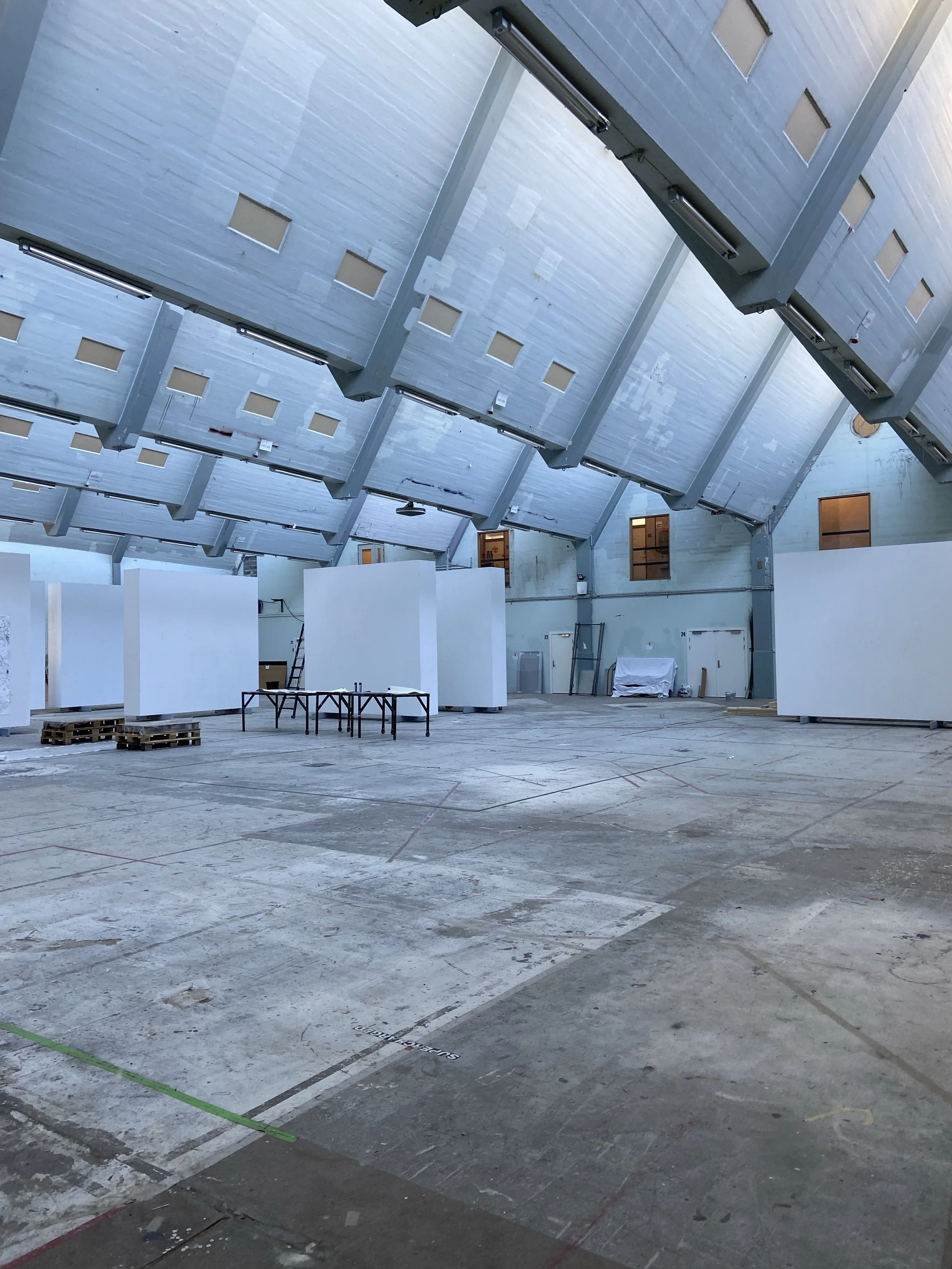
Transformation
Not every good design decision starts with a blank site. A growing share of our work is transformation — reworking existing buildings rather than replacing them, extending their life and relevance instead of their footprint.
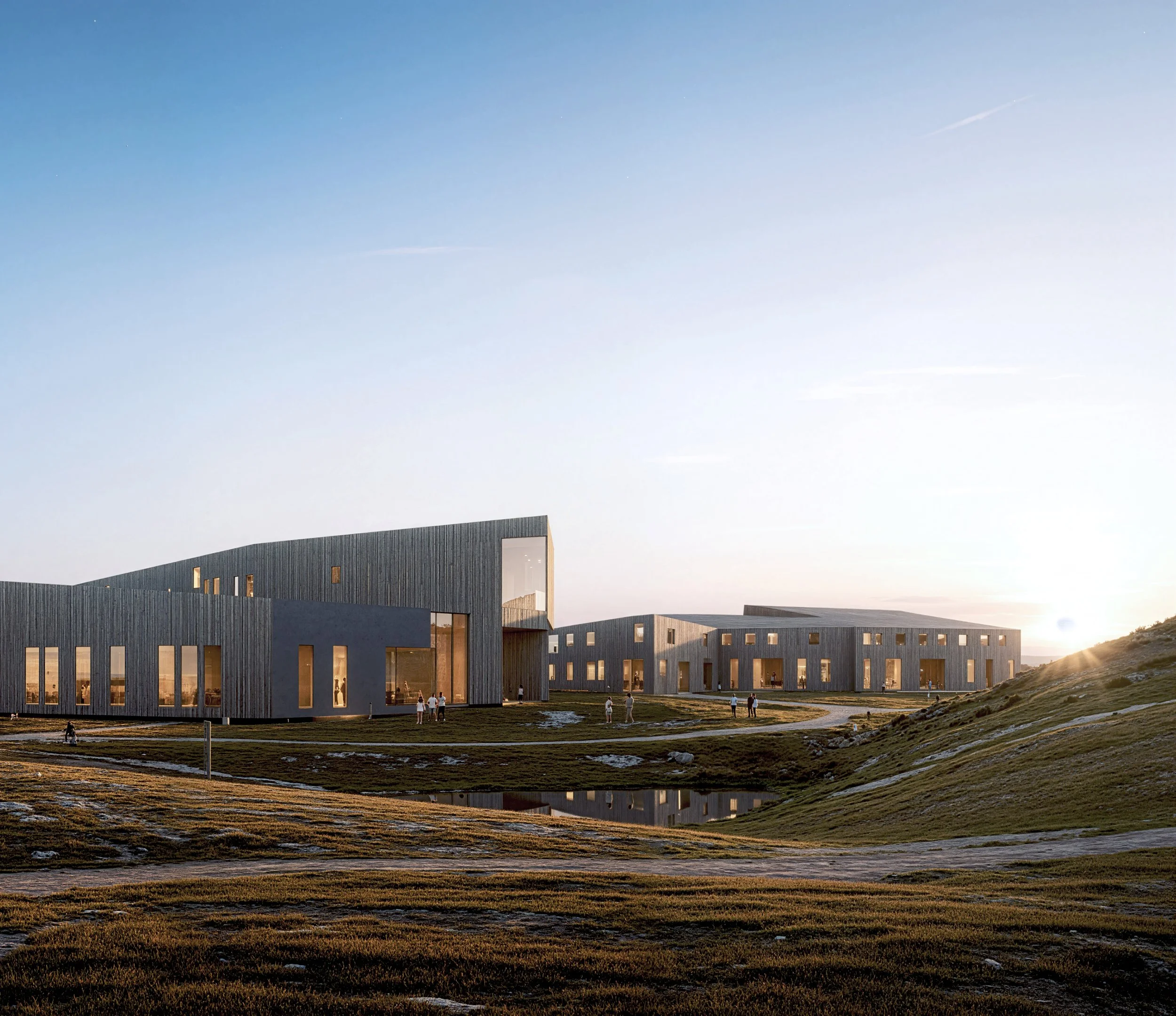
Climate adaptation & landscape
Beyond buildings, we design landscapes that help places live with a changing climate: managing cloudbursts and meltwater, protecting and strengthening biodiversity, and building resilience into the ground a project sits on, not just the structure on top of it.
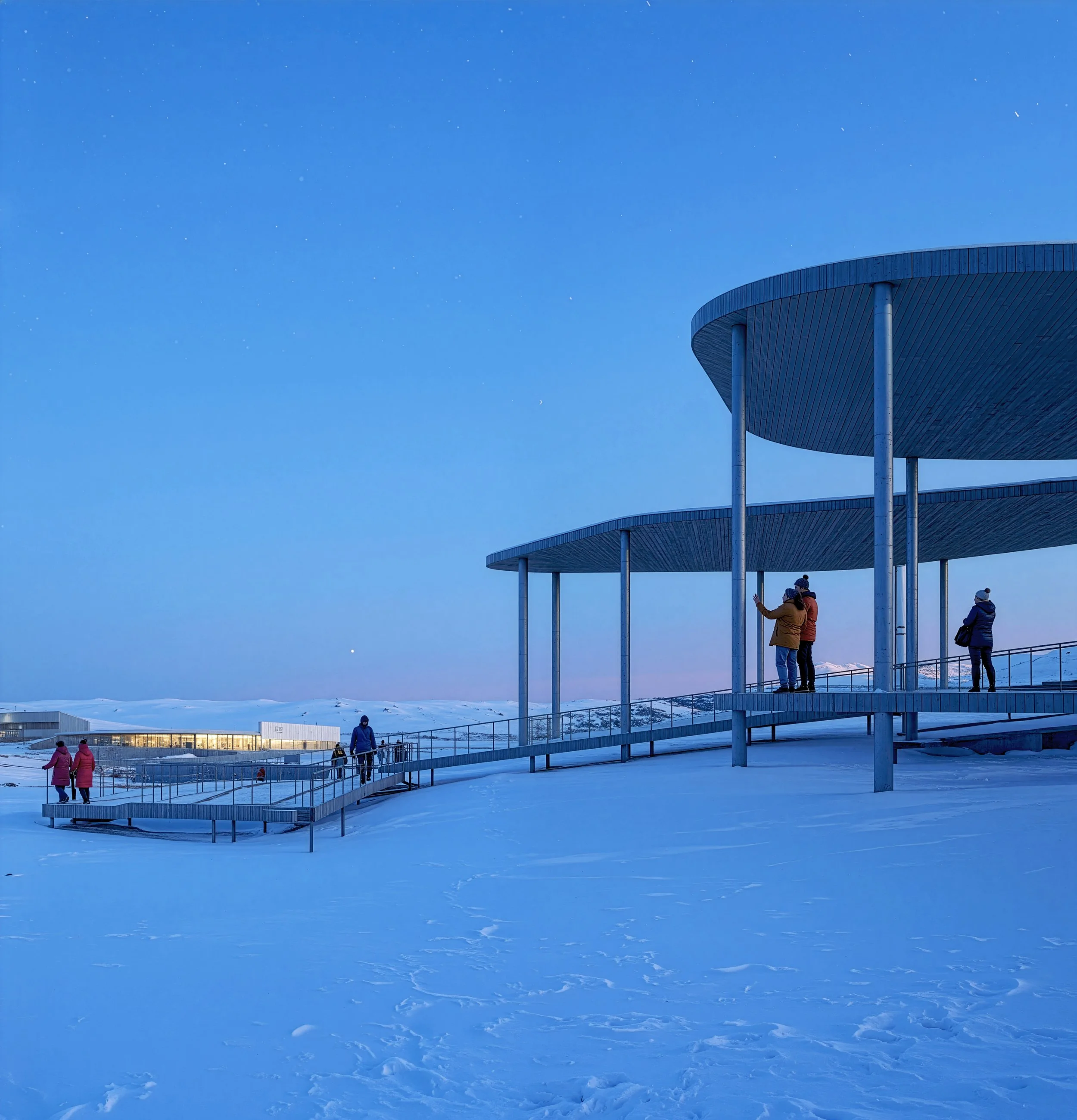
Communities
Architecture and landscape are ultimately shaped by the people who live with them. That's taken us into close collaboration with the communities we design for — from Indigenous communities across the Arctic and North Atlantic to the stakeholders and residents we work alongside closer to home. Local knowledge doesn't just inform our decisions; it drives them, the same as wind, snow, or CO2 impact.
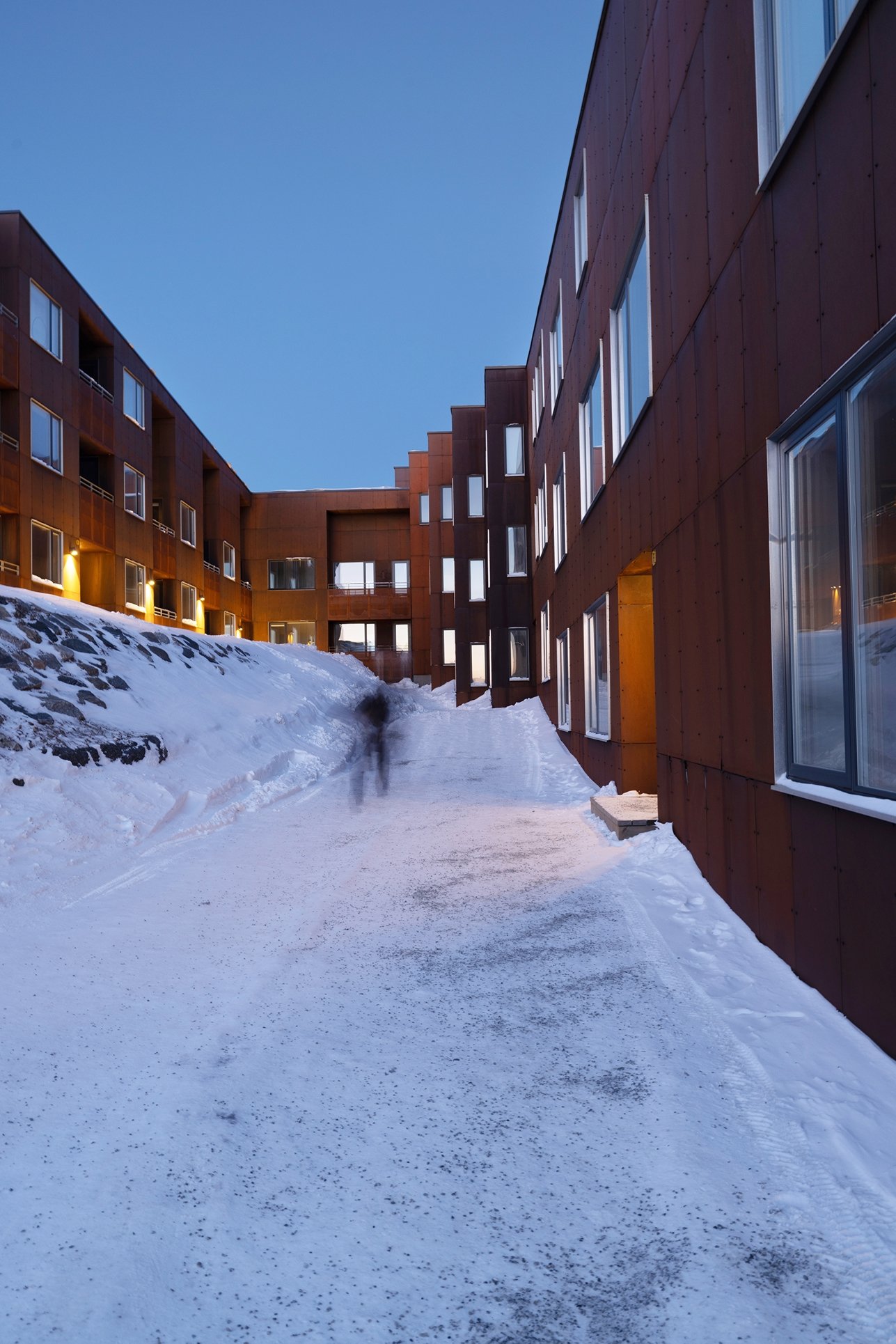
Nordic and Arctic contexts
Whether it's a summerhouse on the Danish coast or a housing project deep in the Arctic, we've built particular depth in reading Nordic climates — wind, light, snow, and exposure — and turning them into design assets rather than obstacles.