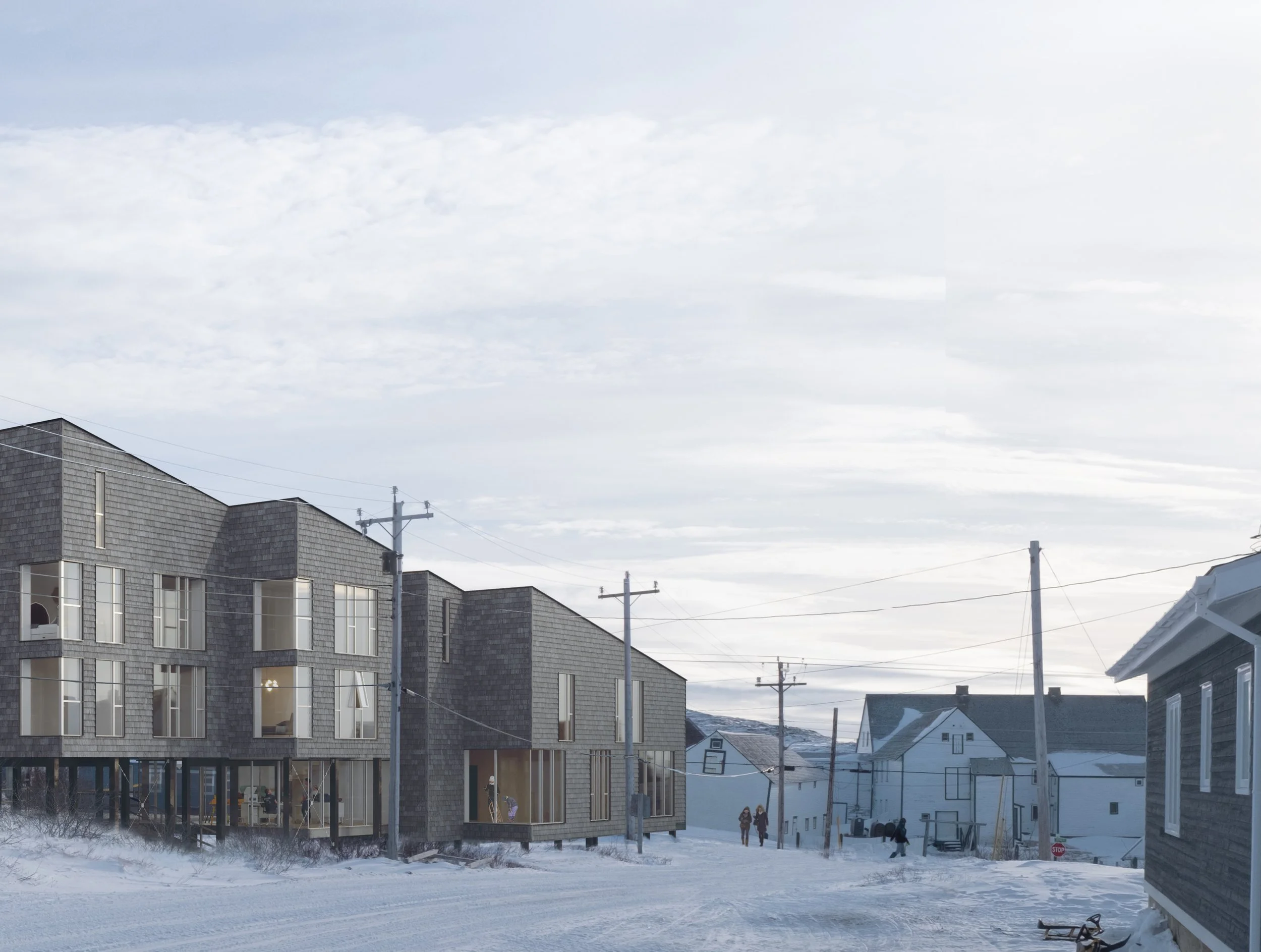
hopedale
P177 · hopedale
55.4595° N, 60.2115° W
low arctıc / hopedale, NL, Canada
housıng / ın progress
2023 · planned
Visualization / ArtefactoryLab
Hopedale responds to an urgent need for new housing in a Low Arctic coastal settlement where suitable buildable land is scarce and the landscape holds deep cultural significance.
Rather than imposing conventional development, the project is shaped by the terrain, climate, and the Inuit community's close relationship with the land.
Guided by a climate-driven, minimal-impact approach, BIOSIS identified and developed buildable sites without extensive rock blasting, allowing buildings to step with the natural topography and preserve bedrock and vegetation. Studies of wind, sun, and microclimate inform the placement and orientation of housing and shared facilities, creating sheltered outdoor spaces and improving comfort in an exposed environment. The project integrates approximately 25 homes with shared community functions, establishing a resilient, landscape-sensitive framework for long-term housing rooted in place.
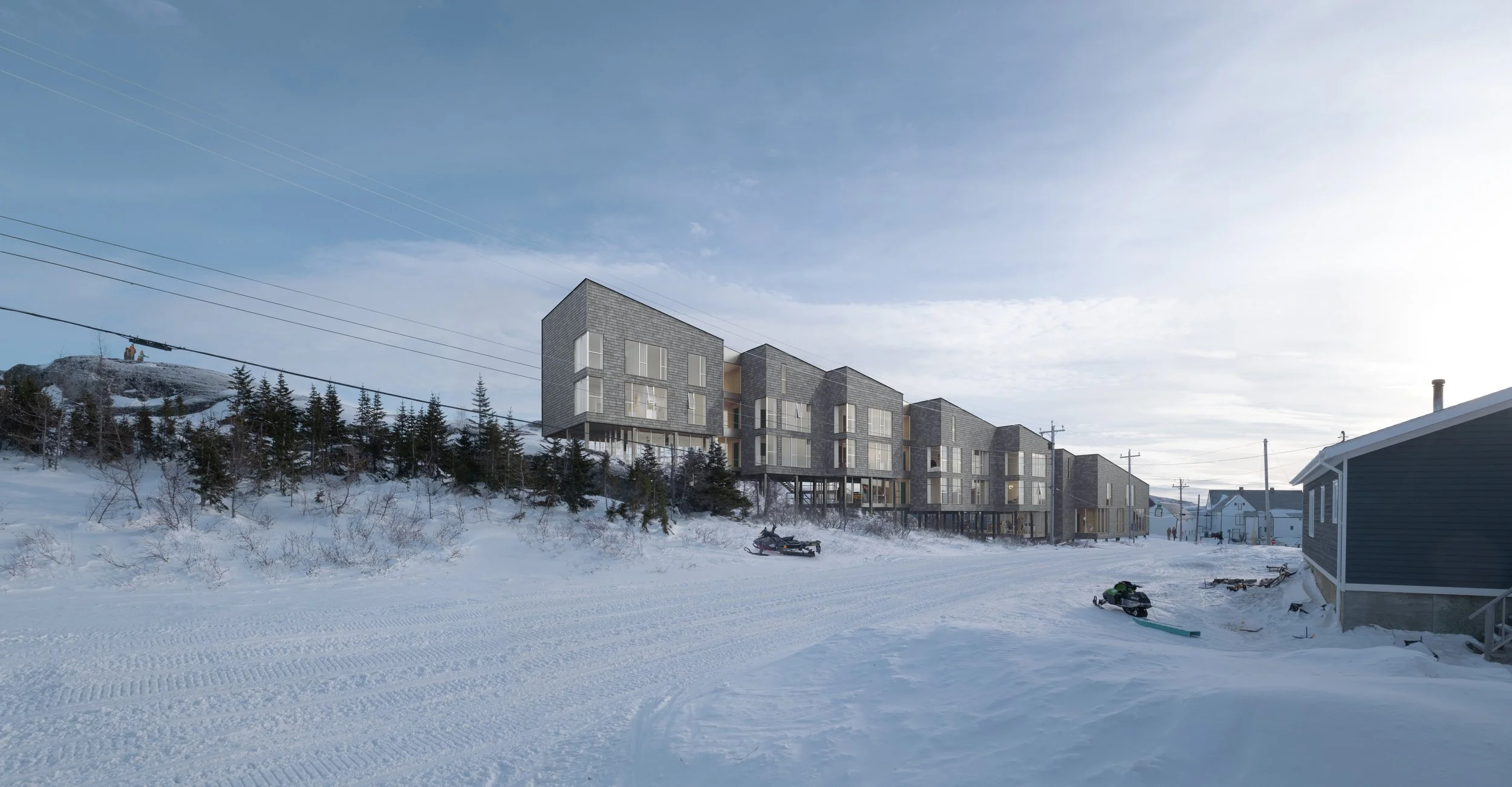
A building in the depths of winter. In climates like these, architecture is measured by how it performs when the weather closes in.
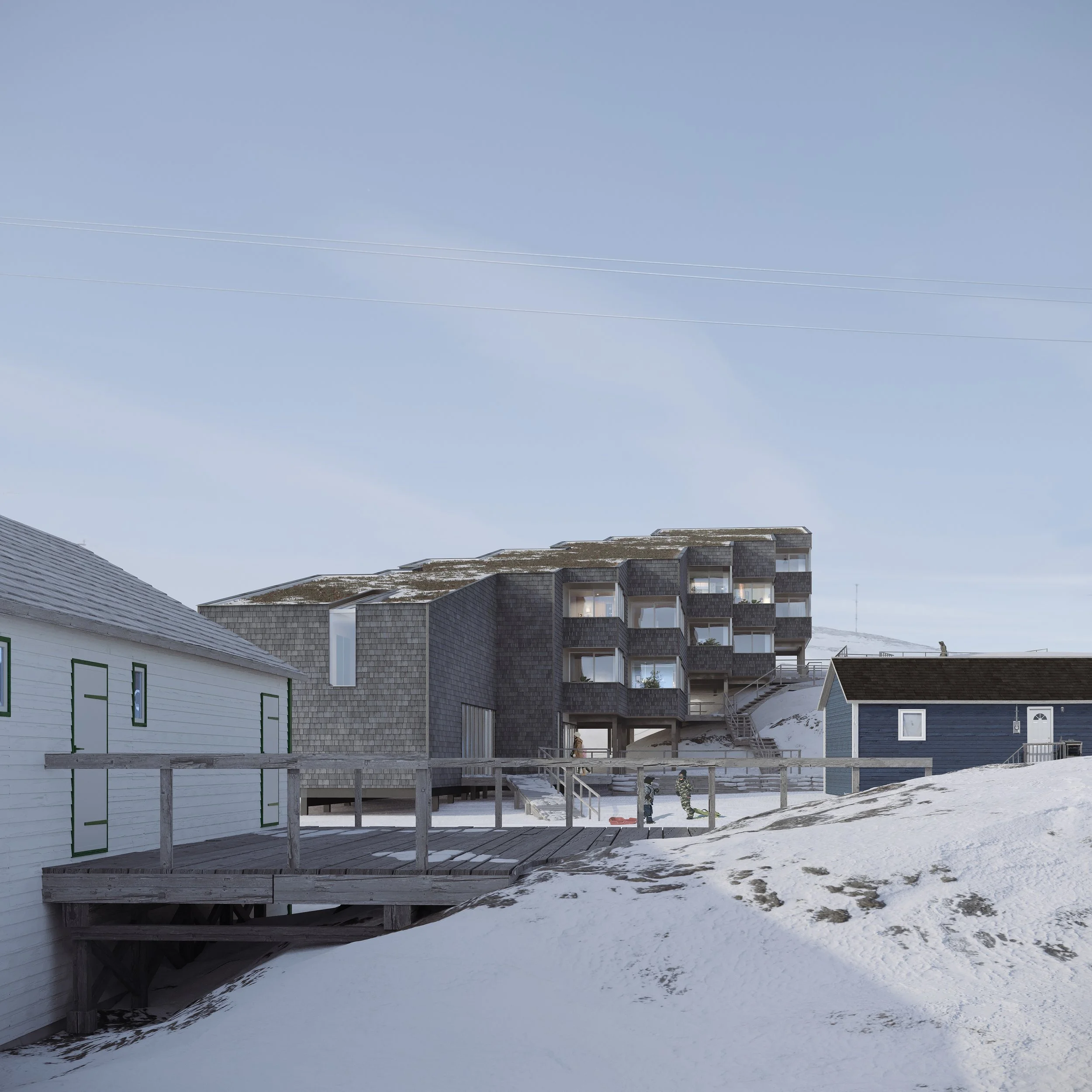
In the deep winter, when daylight lasts only hours, each lit window becomes a quiet threshold between the dark land and the life within.
THRESHOLDS OF LIGHT
A WINTER WALKTHROUGH
Warm interior light reads against the polar dusk — a marker of shelter and gathering through the long northern winter.
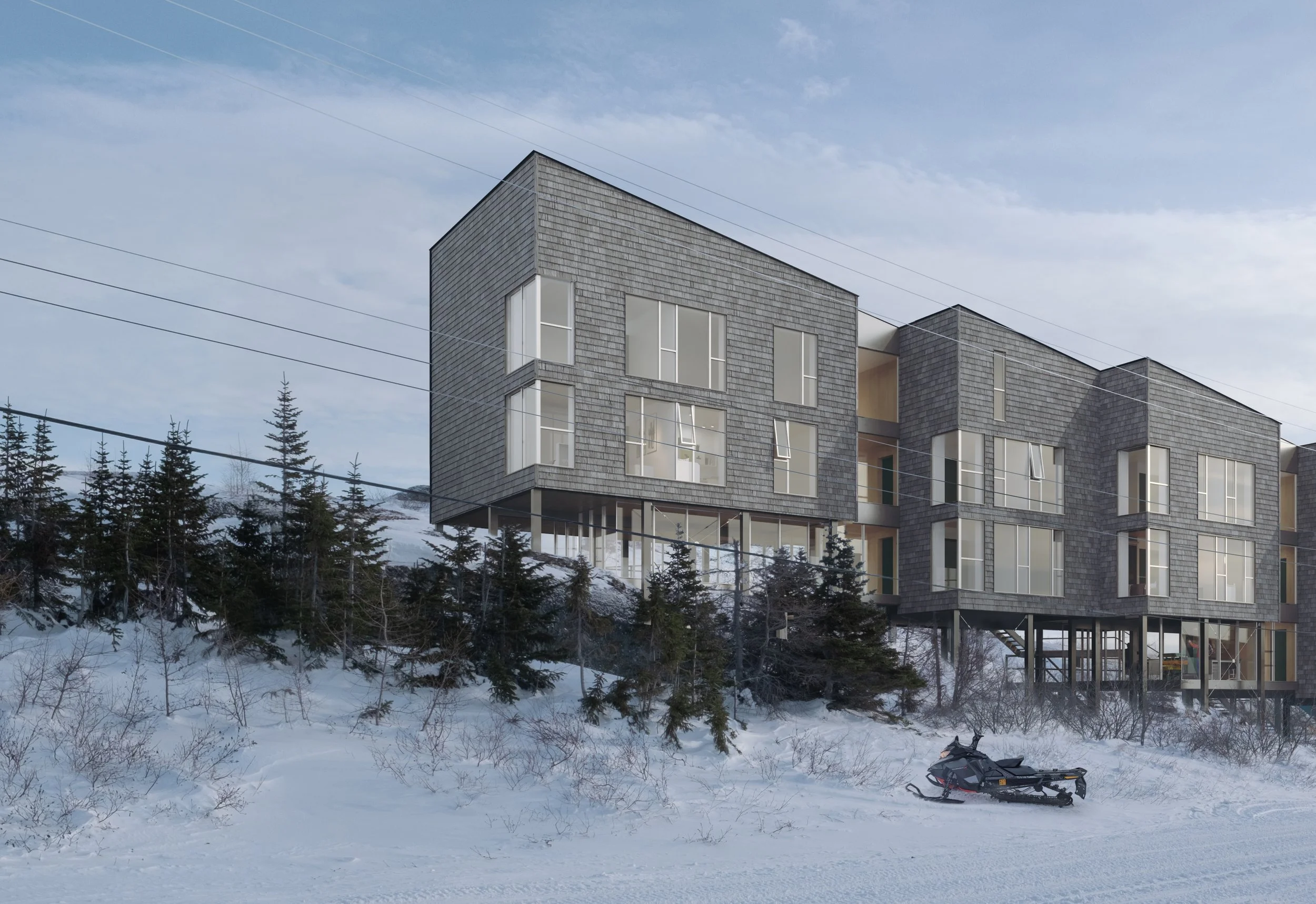
At the scale of the settlement, the project reads as a continuation rather than an imposition. The volumes echo the grain and pitch of Hopedale's existing houses, and their timber-shingle cladding — weathering to a silvered grey — sits quietly against the lichen-streaked rock and low tundra. The development is woven into the existing urban fabric, knitting new homes into the community without overwhelming it.
Hopedale brings together approximately 25 homes with shared community spaces, including a language nest dedicated to the teaching and revitalization of the Inuit language. Housing here is understood as more than shelter: it is infrastructure for cultural continuity, gathering, and belonging. By embedding shared and cultural functions within the residential framework, the project responds at once to the immediate shortage of homes and to the longer work of sustaining language, knowledge, and connection to place.
The result is a chain of linked housing volumes that step down the natural slope and stand on slender columns where the ground falls away. Lifting the buildings allows them to touch the terrain lightly: bedrock, soil, and vegetation continue beneath them, meltwater and drifting snow move freely rather than banking against walls, and the topography is preserved instead of rebuilt. The sheltered space gained beneath the raised volumes is returned to the community, housing shared functions that anchor the development to everyday life.
Orientation and placement were guided by detailed study of sun, wind, and microclimate in this exposed maritime-Arctic setting. The staggered, offset arrangement of the volumes is not only a response to topography but a climatic device: it breaks the prevailing wind, shelters the outdoor spaces between and below the buildings, and admits the low Arctic sun where it is most valuable. In a place where comfort outdoors is hard-won, these sheltered thresholds extend the usable life of the spaces around the homes.